In the world of cooking, a sharp knife isn’t just a tool; it’s a culinary superhero. While some might think a knife is just for slicing veggies, it’s the secret weapon that can transform a home cook into a kitchen ninja. Mastering knife techniques isn’t just about chopping onions without shedding a tear; it’s about elevating every meal from mundane to mouthwatering.
Essential Knife Techniques
Mastering essential knife techniques elevates cooking skills, allowing for precision and efficiency. Understanding techniques like chopping, slicing, and dicing significantly enhances meal preparation.
Chopping
Chopping involves cutting food into smaller pieces using a quick, uniform motion. Proper grip on the knife’s handle ensures better control. Position fingers back on the ingredient while curling fingertips for protection. Employing a rocking motion with the knife, the tip often remains in contact with the cutting board. Chopping is effective for ingredients like herbs and vegetables, providing a consistent user experience.
Slicing
Slicing entails cutting food into thin pieces, maximizing texture and presentation. Holding the knife at a slight angle promotes clean cuts. Using a smooth motion prevents tearing of delicate ingredients, like tomatoes or bread. Slicing creates uniform pieces that cook evenly, enhancing both appearance and taste. Utilizing a sharp knife eliminates resistance, making it simple to glide through food.
Dicing
Dicing requires cutting food into small, square pieces, ideal for various culinary applications. Start with even slices before rotating the food for uniform cubes. Maintaining consistent size throughout ensures even cooking. Cooking processes, such as sautéing, benefit from diced vegetables due to quicker cooking times. Employing the proper technique results in aesthetically pleasing dishes, enhancing the overall dining experience.
Types of Knives
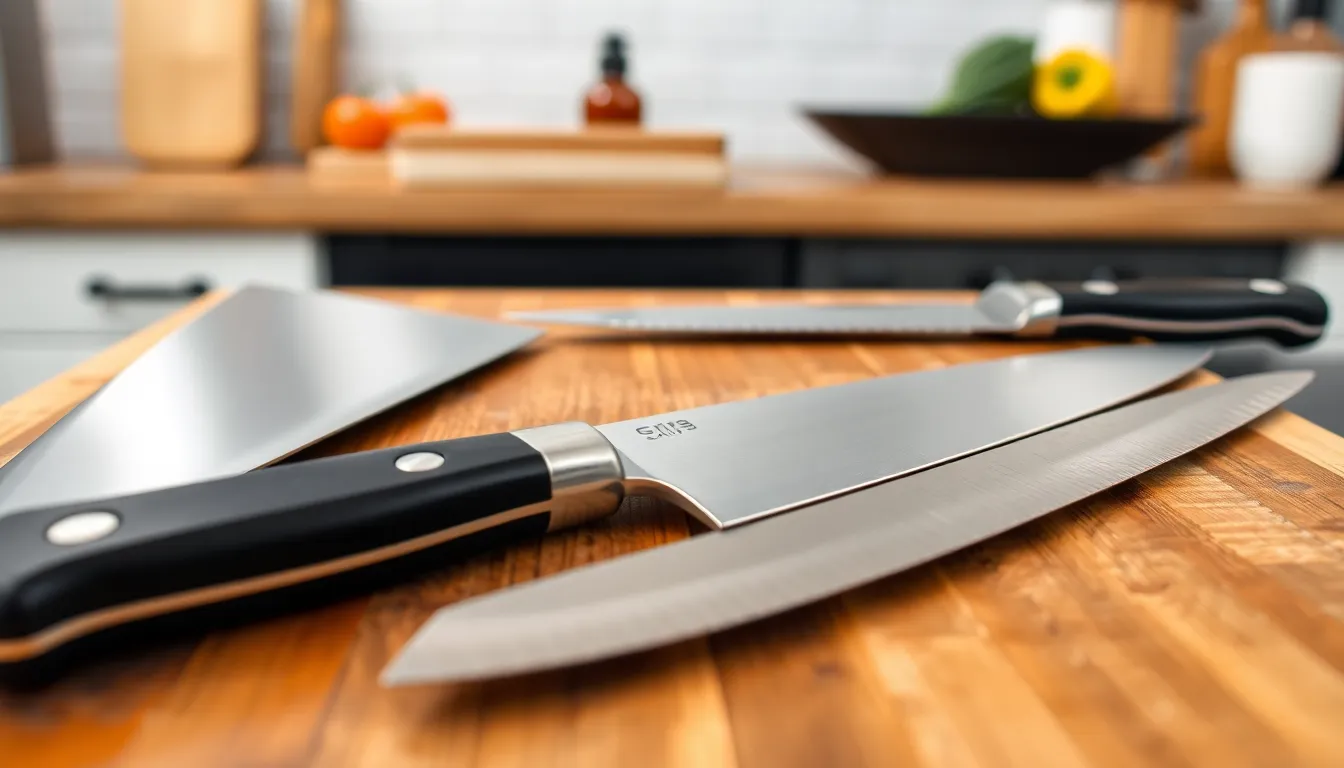
Each knife plays a unique role in the kitchen, helping to simplify various cooking tasks. Understanding the types of knives improves efficiency and effectiveness in meal preparation.
Chef’s Knife
The chef’s knife measures between 8 to 10 inches and serves multiple purposes. This versatile tool excels at chopping vegetables, slicing meats, and dicing herbs. A well-balanced chef’s knife enhances control and precision, making it an essential item for any cook. Professional chefs often rely on this knife for daily tasks due to its adaptability. A comfortable grip and sturdy blade characterize high-quality options, allowing for various cutting techniques.
Paring Knife
Paring knives typically have a blade length of around 3 to 4 inches, designed for intricate tasks. These knives excel at peeling fruits and vegetables, along with deveining shrimp. Precision is key, as this knife allows for detailed work that larger knives cannot achieve. A paring knife’s small size makes it perfect for maneuvering around curves and small surfaces. Whether it’s preparing garnishes or slicing small fruits, this knife proves invaluable.
Serrated Knife
Serrated knives, often referred to as bread knives, feature a scalloped edge that excels at cutting through crusty surfaces. These knives effectively slice through bread without crushing the loaf, preserving texture. Additionally, serrated knives work well for soft fruits like tomatoes and citrus, allowing for clean cuts. The design minimizes the risk of slipping while cutting, providing safety and ease. A good serrated knife remains an essential kitchen tool for handling baked goods and delicate items.
Knife Skills for Different Ingredients
Mastering knife skills for various ingredients enhances efficiency and improves the quality of meals. Each type of ingredient requires specific techniques to maximize flavor and texture.
Vegetables
Chopping vegetables involves quick, uniform motions. Precision is key to achieve even cooking and presentation. For instance, onions demand a technique where the knife slices through layers efficiently, minimizing tears. Carrots require a sturdy grip, ensuring consistent shapes for even cooking times. Leafy greens like basil benefit from a chiffonade technique, yielding thin ribbons that maintain flavor integrity.
Fruits
Slicing fruits correctly impacts taste and aesthetics. A paring knife aids in peeling apples or oranges effortlessly. When preparing strawberries, using a hull removal technique exposes the fruit’s sweet flesh. Pineapples require a combination of slicing and dicing. The goal remains to create uniform pieces, enhancing visual appeal in salads and desserts. Avocado halving demonstrates the importance of knife safety, as the soft flesh yields easily to a sharp blade.
Proteins
Cutting proteins necessitates distinct techniques based on the type. For beef, the method of cutting against the grain improves tenderness. Chicken fillets benefit from even slicing, allowing for uniform cooking. When preparing fish, precise filleting showcases skill, with the knife gliding along bones with ease. The correct technique ensures flavors meld beautifully during cooking, enhancing the overall dish.
Safety Tips for Using Knives
Using knives safely is crucial in the kitchen. Always cut on a stable surface like a cutting board. A firm grip on ingredients prevents slips and accidental cuts.
Keep fingers curled and out of the blade’s path. This technique, known as the “claw grip,” protects fingertips during slicing or dicing.
Select the right knife for each task. Using a chef’s knife for heavy chopping and a paring knife for delicate peeling enhances control and safety.
Maintain sharp blades. Dull knives require more force, increasing the risk of slipping. Regularly honing or sharpening knives ensures optimal performance.
Store knives properly. A knife block or magnetic strip keeps blades secure and inaccessible to children. Avoid placing knives in drawers without protection to prevent nicks and accidents.
Carry knives safely by holding them by the handle with the blade facing down. Communicating with others in the kitchen when moving can prevent collisions.
Clean knives immediately after use. Bacteria can proliferate on blade surfaces. Washing with hot, soapy water and drying thoroughly extends knife longevity.
Encourage proper knife etiquette among family or kitchen staff. Remind everyone not to engage in distractions while cutting, as focus is vital in preventing accidents.
Understanding and following these safety tips creates a safer cooking environment. Prioritizing knife safety protects cooks and enhances the overall cooking experience.
Mastering knife techniques is vital for anyone looking to elevate their cooking skills. A sharp knife not only enhances precision but also transforms meal preparation into an enjoyable experience. By understanding the various types of knives and their specific uses, cooks can tackle a range of ingredients with confidence.
Incorporating essential techniques like chopping, slicing, and dicing into daily cooking routines can lead to improved flavor and presentation. Prioritizing safety while handling knives ensures a secure kitchen environment. With practice and dedication, anyone can become proficient in these skills, making every meal an opportunity for creativity and culinary excellence.