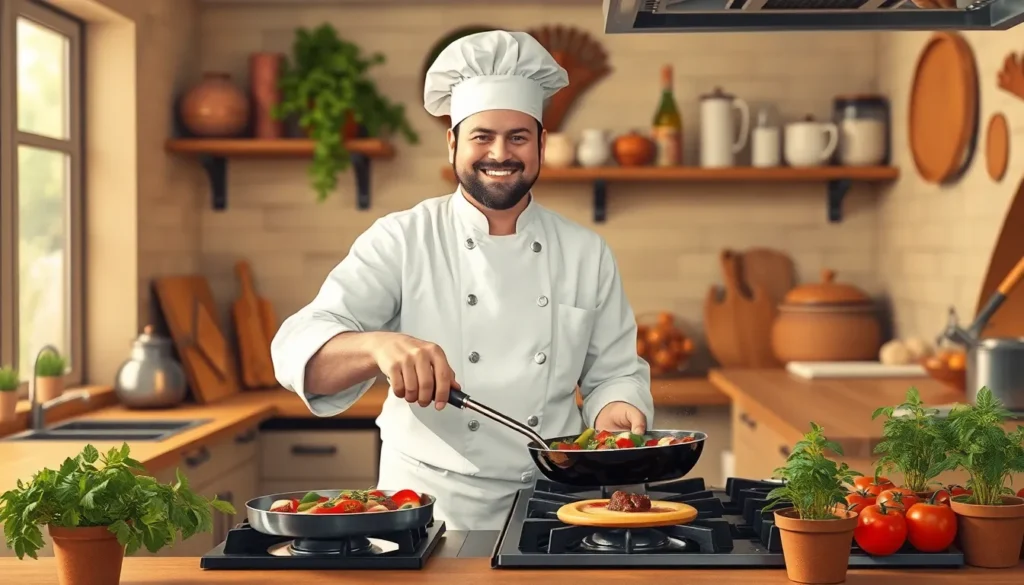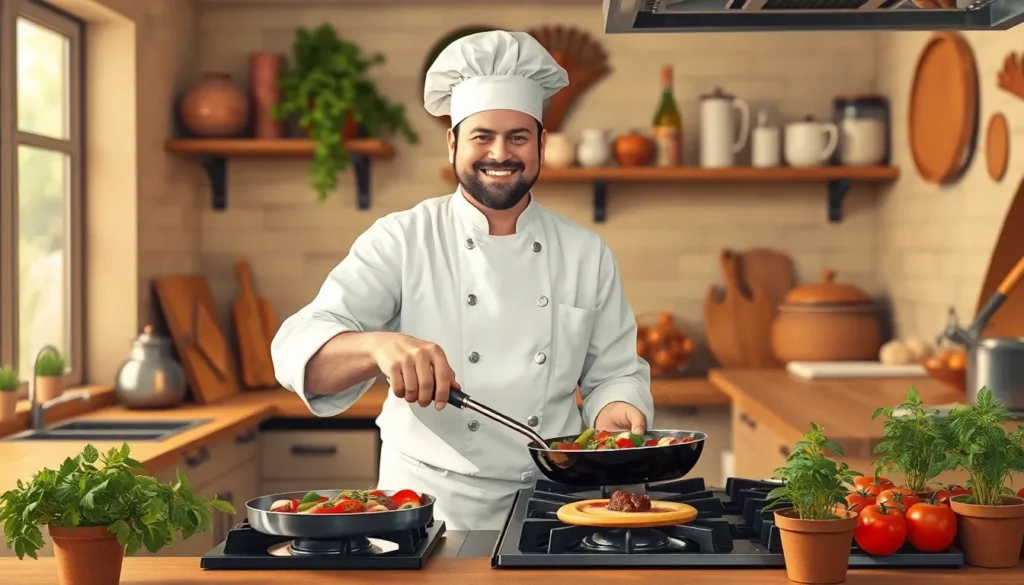
Italian cooking isn’t just about pasta and pizza; it’s a culinary art form that can transform any kitchen into a trattoria. With techniques passed down through generations, mastering Italian cooking can make anyone feel like a Michelin-starred chef—even if their only prior experience was microwaving leftovers.
Overview Of Italian Cooking Techniques
Italian cooking encompasses a variety of techniques that enhance flavor and texture. One prominent method is risottare, which involves toasting rice before slowly adding broth. This process releases starch, creating a creamy consistency, ideal for dishes like risotto.
Another essential technique is sautéing, used to cook vegetables and proteins over high heat. Sautéing brings out natural flavors and maintains a crisp texture. This method is evident in various traditional dishes, showcasing fresh ingredients.
Grilling, or alla griglia, plays a significant role in Italian cuisine. It involves cooking food over an open flame or hot coals, imparting a smoky flavor. Grilled meats and vegetables can serve as the centerpiece of a meal or a flavorful addition to salads.
Baking also holds an important place in Italian cooking. Techniques such as using a wood-fired oven create a unique depth of flavor in pizza and breads. Neapolitan pizza exemplifies this, featuring a bubbly crust achieved only through high temperatures.
Stewing represents another technique, where ingredients simmer over low heat. This method allows flavors to meld harmoniously. Classic dishes like osso buco are crafted through this slow cooking process, resulting in tender meat and rich sauce.
Emulsifying creates a unified sauce from oil and vinegar, essential for vinaigrettes and dressings. Understanding how to properly emulsify, especially in dishes like pan sauce, can elevate flavors.
Mastering these techniques fosters confidence in the kitchen. Each method highlights the importance of quality ingredients and tradition, allowing anyone to embrace the art of Italian cooking.
Key Cooking Methods

Italian cooking showcases diverse techniques that infuse dishes with authentic flavors and textures. Mastering these methods is essential for creating memorable meals.
Sautéing
Sautéing involves cooking ingredients quickly over high heat in a small amount of fat, typically olive oil or butter. This method enhances the natural flavors of vegetables and proteins, making them more vibrant. Precise timing is crucial; ingredients like garlic, onions, and bell peppers should heat just until tender. A quick deglaze with wine can elevate the dish, incorporating those rich, browned bits from the pan. Properly sautéed ingredients retain their color, nutrients, and texture, resulting in dishes that capture authentic Italian essence.
Braising
Braising combines two cooking techniques: searing and slow-cooking. First, the meat is seared to create a flavorful crust. After that, a liquid such as broth, wine, or tomato sauce is added, covering the pot and allowing it to simmer at low heat. Slow cooking melds flavors, creating tender meat that falls off the bone. Classic Italian dishes, like osso buco or braised artichokes, exemplify this technique. Many chefs enhance braised dishes by using aromatic vegetables, herbs, and spices, ensuring a depth of flavor that characterizes Italian cuisine.
Grilling
Grilling, known as alla griglia, emphasizes cooking over direct heat, imparting a distinct smoky flavor. This method works ideally for meats, vegetables, and even seafood, enhancing their natural taste. High temperatures create appealing grill marks while sealing in moisture. Brushes of olive oil or marinades before grilling add an extra layer of flavor. Classic Italian grilled dishes include bruschetta and skewers, often served with fresh herbs and lemon. The result is a delightful balance of char and freshness, offering a truly Italian dining experience.
Essential Ingredients
Italian cooking thrives on quality ingredients that enhance flavors. Essential ingredients form the foundation of traditional dishes, allowing techniques to shine.
Fresh Herbs
Fresh herbs elevate Italian cuisine, offering vibrant flavors and aromas. Basil stands out as a staple herb, often used in sauces like pesto. Oregano plays a crucial role in marinara sauces and pizza recipes, providing a distinct earthy flavor. Parsley adds brightness to various dishes and garnishes, while rosemary complements roasted meats beautifully. Thyme contributes to the depth of stews and braises, creating layers of flavor. Utilizing fresh herbs brings authenticity, flavor, and dimension to Italian meals.
Olive Oil
Olive oil serves as one of the cornerstones of Italian cooking. Extra virgin olive oil, in particular, is prized for its robust flavor and health benefits. It forms the base for dressings, marinades, and sauces like aioli. Many cooks use it to enhance sautéed vegetables, imparting richness. Drizzling olive oil over finished dishes adds a touch of luxury and depth. Quality olive oil supports the aromas and textures of food, making it an essential ingredient in Italian kitchens.
Regional Variations
Italian cooking varies significantly across regions, showcasing local ingredients and preferences. Each area boasts unique techniques tailored to its culinary traditions.
Northern Italian Techniques
Northern Italy emphasizes rich, creamy sauces and hearty dishes. Risottos, a staple in this region, feature Arborio rice cooked slowly in broth, creating a creamy texture. A variety of cheeses, such as Gorgonzola and Fontina, often complement dishes, enhancing flavor and depth. Polenta, made from cornmeal, serves as a versatile base for stews and meats. Fresh herbs, like basil and parsley, provide brightness, while butter replaces olive oil for richer flavors. Traditional meals include hearty pasta dishes, such as tagliatelle with meat ragu.
Southern Italian Techniques
Southern Italian cuisine highlights bold flavors and simpler preparations. Olive oil remains central, often used generously in cooking. Tomato-based sauces, such as marinara and arrabbiata, form the foundation of many dishes. Pasta is frequently cooked to al dente perfection, served with fresh seafood and vegetables like eggplant and zucchini. Grilling, or alla griglia, creates smokiness in meats and vegetables, enhancing their natural tastes. The use of sun-dried tomatoes and capers adds a distinct richness. Traditional dishes like spaghetti alle vongole showcase the region’s coastal bounty.
Italian cooking techniques offer a gateway to a world of flavor and tradition. By embracing methods like sautéing grilling and risottare anyone can transform their culinary skills and create authentic dishes. The focus on quality ingredients such as fresh herbs and extra virgin olive oil further enhances the experience.
Exploring regional variations adds depth to the understanding of Italian cuisine making it a rich tapestry of flavors and techniques. Whether one is a novice or an experienced cook the journey through Italian cooking is rewarding and fulfilling. With practice and passion anyone can bring a taste of Italy into their kitchen.