Diving into the world of Chinese cooking techniques is like embarking on a culinary adventure where the flavors are bold and the aromas are irresistible. From the sizzle of a hot wok to the gentle steam rising from a bamboo basket, each method tells a story of tradition and creativity. Whether you’re a seasoned chef or a kitchen novice, mastering these techniques can transform any dish from ordinary to extraordinary.
Overview of Chinese Cooking Techniques
Chinese cooking techniques showcase a variety of methods that highlight the unique flavors and textures of ingredients. Stir-frying stands out as a fundamental technique, utilizing a hot wok to cook food quickly while retaining vibrant colors and nutritional value. Steaming, another essential method, employs bamboo baskets to preserve the freshness and delicate taste of vegetables and fish.
Braising combines both moist and dry heat, allowing flavors to meld deeply in dishes like red-cooked pork. Deep-frying introduces crispy textures in foods, providing an addictive crunch. Roasting, particularly for meats, enhances the umami profile through caramelization and browning.
Each cooking technique emphasizes seasonality, regional ingredients, and culinary traditions. Grilling, often used for meats and vegetables, imparts a smoky flavor that complements many Chinese dishes. Poaching uses gentle heat to produce tender and succulent results, especially in soups or seafood preparations.
Fermenting, significant in the preparation of sauces like soy sauce and vinegar, enriches dishes with complex flavors. In addition, braising tends to create a hearty depth in stews, achieving tenderness with time.
The interplay of these techniques contributes to the vibrant and diverse landscape of Chinese cuisine, making it approachable for both novice and seasoned cooks. Mastering these methods allows individuals to create authentic and delightful meals that reflect China’s culinary heritage.
Essential Tools for Chinese Cooking
The right tools make a significant impact on Chinese cooking. Mastering specific equipment enhances the culinary experience and ensures authentic flavors.
Woks and Pans
Woks serve as the cornerstone of Chinese cooking. Their round bottoms allow for even heat distribution, making them perfect for stir-frying. Additionally, a well-seasoned wok develops a natural nonstick surface. Carbon steel woks provide exceptional heat retention. In contrast, nonstick pans offer convenience for novice cooks. Stainless steel pans work well for braising and sautéing, providing versatility in cooking methods. Selecting the right type of wok can elevate dishes like fried rice and stir-fried vegetables.
Knives and Cutting Boards
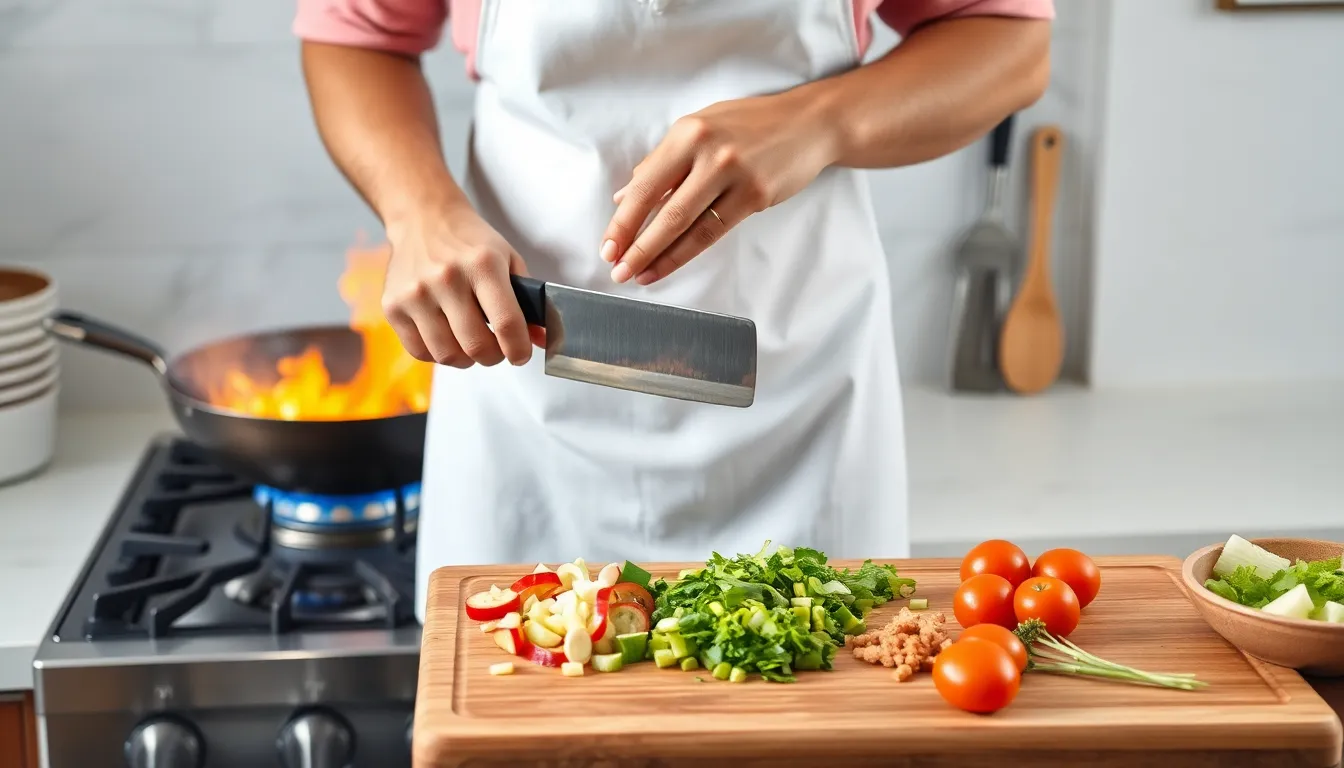
Knives hold critical value in any kitchen. A Chinese cleaver can chop, slice, and even crush ingredients effectively. Their flat blade design allows for versatility and control. Chef’s knives also play a role, especially when precision cutting is necessary for intricate dishes. Investing in a durable cutting board is essential, too. Wooden boards absorb knife impacts well while minimizing wear on blades. Alternatively, plastic boards are lightweight and easy to sanitize. Proper knife skills and quality tools streamline food preparation, ensuring fresh and flavorful results.
Common Chinese Cooking Techniques
Chinese cooking offers a variety of techniques that enhance flavors and textures. Below are some commonly used methods.
Stir-Frying
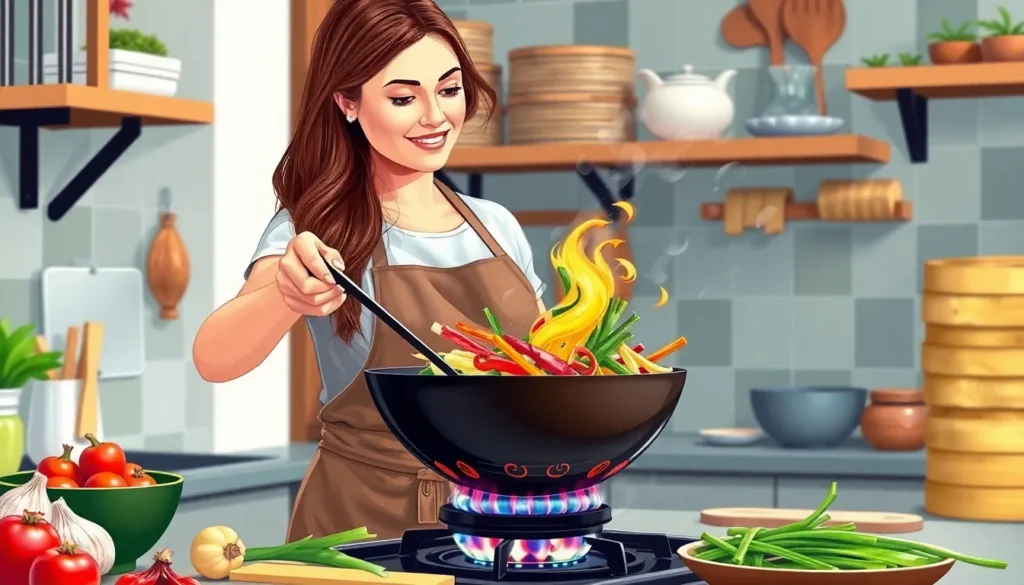
Stir-frying involves quickly cooking ingredients over high heat in a wok, which creates a delicious sear while retaining crispness. It requires a small amount of oil, allowing the ingredients to cook rapidly while preserving their nutrients and vibrant colors. Chefs often use a combination of sliced vegetables and proteins, tossing them frequently to promote even cooking. This technique is ideal for creating dishes such as fried rice or kung pao chicken.
Steaming
Steaming provides a healthful way to cook, using water vapor to preserve the food’s natural flavor and nutrients. Ingredients placed in a bamboo basket or metal steamer remain moist and tender. This technique often results in delicate textures and is frequently used for dumplings and buns. Seasoning can be applied before steaming for additional flavor enhancement, showcasing the dish’s natural essence.
Braising
Braising combines dry and moist heat techniques to develop rich flavors in dishes. Initially, ingredients are seared at high heat, followed by slow cooking in a covered pot with liquid. This method ensures that tougher cuts of meat become exceptionally tender while absorbing complex flavors from spices and aromatics. Common examples are red-cooked pork and braised beef shanks, both offering warm, savory experiences.
Deep-Frying
Deep-frying produces a crispy, golden exterior and a moist, tender interior. Food is submerged in hot oil, allowing for even cooking and a satisfying crunch. This technique is popular for dishes like spring rolls and crispy chicken. Controlling oil temperature is crucial; too low results in greasy food while too high can burn the coating. Proper frying yields delightful textures and flavors.
Boiling
Boiling involves cooking food in rapidly bubbling water and is essential for preparing noodles and soups. The technique enhances flavors, particularly when combined with seasonings or broths. Boiling also softens ingredients like vegetables, making them palatable and digestible. Precision timing is necessary to avoid overcooking, ensuring the dish remains vibrant and enjoyable.
Flavoring Methods in Chinese Cooking
Flavoring plays a crucial role in Chinese cooking, utilizing sauces and spices to create depth and complexity.
Use of Sauces
Sauces are foundational in Chinese cuisine, enhancing the flavor profile of dishes. Soy sauce adds umami, while oyster sauce brings a rich, savory note. Hoisin sauce, with its sweet and tangy characteristics, complements stir-fries beautifully. Additionally, chili sauce contributes heat, making dishes vibrant and exciting. Vinegar, such as rice vinegar, offers acidity that balances richer flavors. Mastery of these sauces allows for versatile applications, whether in marinades, dipping sauces, or cooking liquids. Each sauce contributes to a distinct culinary experience, showcasing regional preferences and individual tastes.
Spice Blends
Spice blends elevate the taste of Chinese dishes, creating aromatic and flavorful combinations. Five-spice powder consists of star anise, cloves, Chinese cinnamon, Sichuan peppercorns, and fennel seeds, delivering warmth and complexity. Additionally, Sichuan peppercorns provide a unique tingling sensation, enhancing savory dishes. Chili oil serves as a popular condiment, adding both flavor and spice. Cumin is often utilized in regional dishes for a warm, earthy touch. A balance of spices can transform a simple dish into a culinary delight, highlighting the art of flavoring in Chinese cooking.
Exploring Chinese cooking techniques opens up a world of flavor and creativity. Each method not only enhances the taste and texture of dishes but also connects cooks to a rich culinary heritage. By mastering techniques like stir-frying and braising, anyone can elevate their meals from ordinary to extraordinary.
Investing time in understanding essential tools and flavoring methods further enriches the cooking experience. With the right equipment and knowledge of sauces and spices, the possibilities are endless. Embracing these techniques allows cooks to create authentic Chinese dishes that delight the senses and celebrate the beauty of this vibrant cuisine.